ChatBox

Welcome Guys

Showing posts with label forex. Show all posts

FOREX TEMPLATE FOR GRAB

Written By Breaking Lanka News on Tuesday, May 31, 2011 | 5:57 AM


I am thinking of uploading my system to the internet so that it will be available for everyone. It will only be the basic system. The rest you have to figure out yourself.

Can anyone tell me where is the best place to upload and share files. I intend to upload a MT4 template and a text document explaining how it works.
5:57 AM | 0 comments | Read More

FOREX


Have you ever been lost in Forex? Some of you might be thinking, how do i get lost in forex?? Let me ask another question. Have you ever open a trade in one direction, after some time open a trade in the opposite direction?

Im sure that happens to all of us, myself included :). That is lost in Forex, where we are unsure of direction of trade. Some people even hedge in the situation.

I have a few tips when you are lost in Forex.

1. If you are lost and dont know which direction to trade, the most important thing is to stop trading and do something else. Go plant a tree or play games. Dont even look at the charts anymore to avoid confusion.

2. Is to take a trading system and put it on multiple time frame. I trade using the same system on 3 timeframe. 15m, 1h, daily. When all three is pointing at the same direction then I trade. If 2 timeframe is pointing at the same direction then i scalp.

3. After sometime, your brain will start to imprint patterns of Forex. Forex has the same pattern over and over again. In our mind, that pattern has been imprinted and it influence our decision making subconsciously. Once you reach that state you will rarely get lost in Forex. You will know the exact time to trade or to get lost (do something else).

I will try to update this blog. Been so long and so busy with new place. As for Forex, USD pairs are going nowhere at the moment with a high probability to go down further. Good luck on your hunt for pi
5:55 AM | 0 comments | Read More

ITS NOT PIPS BUT PROFIT IN FOREX


You can actually tell if someone is new in Forex by the way they count their pips or profit. When people starts forex they count pips. They can have hundreds of pips a day and yet their profit is low. This is due to the low risk reward ratio they have taken.

Once you are older in Forex, you will see the ratio. No point of taking hundreds of pips when the profit is low. So you start to take high risk high return trade. These trades do not give you high pips but the profit margin is high.

That is how money is to be made in Forex. You actually manage your risk and take profit from it. For today as of now, I already taken 3 trades. 2 profit trades and 1 lost trade. My account grows 37%. Not bad for a slow Monday.

For the answer to Forex, once you know it you will feel helpless. No matter how smart or brilliant you are it counts for absolutely nothing here. I have Banking and IT qualification. Did that help me? 2 different qualification did not help me one bit here. Made me want to cry when I found it out.
5:54 AM | 0 comments | Read More

THE ENDING IS NEAR


1,447 days ago I started to step in the world of Forex. 6th May 2006 is the day I registered my 1st demo account and its a Saturday. Through out my journey in Forex, there are no actual manual, text or books that I can really refer to. Its like an unexplored land with no maps what so ever. There are only guides available online with no one giving specific answer.

Though hard it may be I started to develop my own system and continue to improve on that system. No matter how I try to improve it, there is still something missing. After a long and hard work I finally got the answer. It is an answer that I wasn't willing to accept. So I disappeared for almost 1 year though my part of moving places only took 1 month to settle.

Now I am back trading with the answer in my head thus a new direction in my sight. Turns out it is really easy once you have the right answer. You know the question as well as I do. "WHAT IS FOREX".

I believe my learning period in Forex is almost over. I can now see direction clearly. I know which pair to trade with the highest probability of profit. I know when to exit and I know when to turn off the computer while still holding positions. I have mastered the basic of Forex. The only thing now is discipline and Money Management.

What I am not willing to do is to write in this blog about trading ideas. I may blow out the answer. After almost 4 years, its not something I am willing to give easily. There are no notes, no records, nothing written anywhere on my trading ideas. Its all in my head. My system now is so simple, it consist of only 2 main indicators which I can trade without. Find the answer and its all smooth sailing from there. I just wish I have found it earlier.

For those of you who show interest in my new trading system, thank you for the attention. I have stopped giving out my system due to limited time I have to teach. I dont teach, I dont sell my system, I dont ask for your money and I dont give signals.

You can come and visit this blog. I will give chart analysis from time to time. Dont expect too much coz there is not much in Forex anyway.

Good luck to all of you. Thank you for visiting my blog. For today, do sell GJ coz its going down. You just need to figure out where to enter. Its not an easy task, I know coz Ive been ther
5:52 AM | 0 comments | Read More

FOREX 4TH ANNIVERSARY


Today marks the end of 4th year I am in Forex and I am still here. Most of the friends that I know trade has already stop. It must mean something to stay here for so long when most people quit. Its either I am really stubborn or I am not losing money. Which one you think?

After 3 days of demo trading I got over 25k of profit from 10k max lot trading. Its over 250pip net profit. Not bad for a part time trader and a 7th place so far. I dont think I can be number 1 coz of limited time I trade. Its a good progress, it shows where I am after 4 years. How about you?
5:43 AM | 0 comments | Read More

FOREX 4TH ANNIVERSARY


Today marks the end of 4th year I am in Forex and I am still here. Most of the friends that I know trade has already stop. It must mean something to stay here for so long when most people quit. Its either I am really stubborn or I am not losing money. Which one you think?

After 3 days of demo trading I got over 25k of profit from 10k max lot trading. Its over 250pip net profit. Not bad for a part time trader and a 7th place so far. I dont think I can be number 1 coz of limited time I trade. Its a good progress, it shows where I am after 4 years. How about you?
5:06 AM | 0 comments | Read More

FOREX IS AN ART


When you say trading, people will say trading is an art. Look at all the books that has been published on the subject. They will say the art of trading forex.

In that sense, we must take forex as an art and not a science. I know, some people may not agree with me and all the post that is in this blog. I don't blame them coz I was actually in the same place as they were when I started trading. Trying to find the answer to forex using every logical explanation.

This is the answer that you have been looking for. I am going to give it to you straight away. Let see if your mind can accept it.

Forex is not a science. There is not a single mathematical equation that can explain it. Do not forecast, do not predict, do not anticipate. All you need to do to make profit is to follow the market. If the price is going up, you buy. If the price is going down, u sell. You may not win all the time but if you follow the market, in the end you will be in profit. Make profit and build up your capital up to a point where a few winning trades per month will bring huge profit.

Can you accept it? Can you mind admit it? Is your logical mind challenged? Do you feel helpless? Welcome to the real world :)
4 comments
5:04 AM | 0 comments | Read More

FOREX WITH PEACE OF MIND


Hi everyone,

I hope all of you are doing fine and have lots of pips to enjoy. Just got back from a vacation. 6 days there and I got bored and get back home. Leave my wife and kids there to do their shopping. It seems that I like it better at home than to stay at hotels. Maybe I'm getting old :)

Been a while since I have updated this blog. Been thinking of deleting or selling this blog to anyone who wants it.

Met a friend while on vacation. It seems he is making 15k average per month without even knowing how to trade. Talk about forex with peace of mind. You guys wanna know how he did it? Let me tell you his story.

He wanted to learn from me how to trade but I am reluctant to teach him since this is not something I can teach. I can tell you how I did it but I cant guarantee you can do it the same way I did. Its not pure technical or skill. There are some form of mind control involve. I cant change your mind. You have to do it your self. Free your mind.

He kept asking me how to make money in forex. I gave him a way that is a bit risky but with care everyone can do it. I told him to find a trader that is looking for investors. Lots of new traders around with good skills but low capital. These traders are looking for a way to maximize their income, so they take in few accounts to manage. They trade their own account and at the same time execute the exact same trade on their managed accounts. They take profit from their own account and take commission on manage accounts.

Turns out after 1 year my friend manage to get 15k average monthly income and he knows nothing bout trading. There are few rules to follow if you want to do the exact same way.

1. Study the trader records. At least 3 months maintain profit.
2. Open a trading account with your name tied to your banking account. (dont ever hand him your money)
3. Get the trader details just in case he decide to make a run for it.
4. Ready to accept trading losses. If its a trading loss, accept it and release him from his burden. Trading is already hard enuf. Now you know why I dont manage accounts.
5. Give him your trading account details and leave him alone.
6. Take him out for dinner at the end of the months. Dont ask, let him tell you bout the trading.

Hope that is clear enuf. Those steps are minimal. Extra precaution is always welcome but dont put pressure on the trader. We dont want to send him to a mental hospital or something.

Good luck everyone and happy trading. Im not going to give any trade setup since its all based on situation. If its there, then i trade. Ifs its not there, then I just watch and play with my RC helicopter. My new hobby is RC helicopter btw, a very expensive hobby.... oou
5:03 AM | 0 comments | Read More

Forex Trading

Written By Breaking Lanka News on Sunday, May 8, 2011 | 11:54 AM

There are different forex strategies, which focus on profit targets and individual trader needs. A trader has the choice to hold on investments, buy or sell the currencies. They may lead the trader to win or may lead him to lose but the most important part is that the trader never loses more than what he has won. So, forex strategic appears quite helpful.


Simple Forex Trading Strategies


Trade is a game of mind. If the trader deals intelligently and patiently there are a lot more chances of winning than losing the deals. In fact, it would not be wrong to say that, Forex trading strategies outmatch the number of forex traders. There are certain Forex trading strategies, which help a lot in presuming the market possibilities by critical observation of market trends, financial information and similar features. By looking and adopting these strategies one can surely earn more profit. There are also fewer probabilities of loss.
Prioritizing Business

For a trader to determine the right Forex trading technique, the trader must drive his targets in Forex business. The first and the basic step for a trader is to set his goals and prioritize his business targets. Setting the goals in the right direction is one of the most vital and leading steps towards gaining profit.

Another important step for all traders, who want to trade Forex is to specify a certain amount which they can risk without doing much damage to their trade. A good trader always aims at his profit, so the traders should determine the net profit they are aiming at.

As trade is the name of risk. Therefore, the Forex trading strategies are best adapted on the money the trader wishes to invest.
Day Trading

Day Trading

Day trading involves Forex trading strategies for short term traders who wish to get more profit in a very short time. These traders are mostly new traders and neophyte players. In case of the day trading the whole focus is on investments in which winning seems mandatory. Most of the market analysts believe that it’s the long term investment that leads to apex. This is because, according to them the price volatility, which the day traders take advantage of, are somewhat difficult to predict.

It is important for all the traders who want to trade Forex to ascertain an amount which they can risk without doing much damage to their trade.
Forex Experts

All the forex experts and strategy makers recommend a Forex trading strategy that would make use of the technical analyses and market trends. Political and economic crises have influenced trading a lot. The whole world is facing economic and financial crises, and a good trader should have sharp eyes on these factors. A trader has his own priorities and adopting Forex trading strategy won’t pay off, unless the trader knows the best forex strategy that would suit his priorities.

Forex strategies actually help the trader to broaden his mind and look into varies strategies, which will lead to profitable ways. These strategies given by the experts are to the direction to the trader. It is on the trader to look to the most feasible strategy.
11:54 AM | 0 comments | Read More

Simple Forex Trading Strategies

Written By Breaking Lanka News on Friday, May 6, 2011 | 11:47 AM

There are different forex strategies, which focus on profit targets and individual trader needs. A trader has the choice to hold on investments, buy or sell the currencies. They may lead the trader to win or may lead him to lose but the most important part is that the trader never loses more than what he has won. So, forex strategic appears quite helpful.

Simple Forex Trading Strategies


Trade is a game of mind. If the trader deals intelligently and patiently there are a lot more chances of winning than losing the deals. In fact, it would not be wrong to say that, Forex trading strategies outmatch the number of forex traders. There are certain Forex trading strategies, which help a lot in presuming the market possibilities by critical observation of market trends, financial information and similar features. By looking and adopting these strategies one can surely earn more profit. There are also fewer probabilities of loss.
Prioritizing Business

For a trader to determine the right Forex trading technique, the trader must drive his targets in Forex business. The first and the basic step for a trader is to set his goals and prioritize his business targets. Setting the goals in the right direction is one of the most vital and leading steps towards gaining profit.

Another important step for all traders, who want to trade Forex is to specify a certain amount which they can risk without doing much damage to their trade. A good trader always aims at his profit, so the traders should determine the net profit they are aiming at.

As trade is the name of risk. Therefore, the Forex trading strategies are best adapted on the money the trader wishes to invest.
Day Trading

Day Trading

Day trading involves Forex trading strategies for short term traders who wish to get more profit in a very short time. These traders are mostly new traders and neophyte players. In case of the day trading the whole focus is on investments in which winning seems mandatory. Most of the market analysts believe that it’s the long term investment that leads to apex. This is because, according to them the price volatility, which the day traders take advantage of, are somewhat difficult to predict.

It is important for all the traders who want to trade Forex to ascertain an amount which they can risk without doing much damage to their trade.
Forex Experts

All the forex experts and strategy makers recommend a Forex trading strategy that would make use of the technical analyses and market trends. Political and economic crises have influenced trading a lot. The whole world is facing economic and financial crises, and a good trader should have sharp eyes on these factors. A trader has his own priorities and adopting Forex trading strategy won’t pay off, unless the trader knows the best forex strategy that would suit his priorities.

Forex strategies actually help the trader to broaden his mind and look into varies strategies, which will lead to profitable ways. These strategies given by the experts are to the direction to the trader. It is on the trader to look to the most feasible strategy.
11:47 AM | 0 comments | Read More

Interest Rates Outlook Causes Weekly Slump of Dollar, Forex

Written By Breaking Lanka News on Sunday, April 24, 2011 | 2:02 PM

The US dollar was performing terribly this week against both commodity and safe currencies among signs of economic growth and on speculation that the Federal Reserve will lag with an increase of the interest rates.


The bad performance of the US currency against its safe-haven counterparts was expected, but the drop versus currencies linked to growth wasn’t anticipated. The persisting Europe’s problems with sovereign debt should’ve spurred the greenback against commodity currencies, but that hasn’t happened. It’s surprising to see how easily markets shook off fears of the European crisis and restored their risk appetite.

The strength of commodity currencies against the dollar has the same explanation as before: the global recovery. The US economy itself provided very the confusing signs: while its weak housing market turned out to be better than it was considered, the growth of manufacturing, the one of the strongest US sectors, slowed significantly and unexpectedly. As for performance versus other currencies, analysts remind us about the same old story: the quantitative easing. The US policy makers started talking about an end to the accommodative stance, but talks aren’t enough when other banks, most notably the European Central Bank and Sweden’s Riksbank, already began raising their borrowing costs.

EUR/USD has broken its resistance and jumped from 1.4411 to 1.4647, the highest level since December 2009, over the week, closing at 1.4559. USD/JPY fell from 83.21 to 81.85. USD/SEK closed at 6.1034 after opening at 6.1930 and reaching 6.0717, the lowest level since August 2008.

If you have any questions, comments or opinions regarding the US Dollar, feel free to post them using the commentary form below.

She is Thai sexy actress and popular model, Woranuch Wongsawan. Her nickname is Noon. Noon is one of the famous actress and model in Thailand. She was born in 1980 and studied at College of Nathasin.

Thai sexy actress, Thai popular actress. Thai pretty girl, Asian pretty model, Asian sexy girl.
Pictures
2:02 PM | 0 comments | Read More

Managed Account Forex Trading Software – Automated Forex Trading Software- Web-Based Forex Trading Software- Computer-Based Forex Trading Software

Managed Account Forex Trading Software – Automated Forex Trading Software- Web-Based Forex Trading Software- Computer-Based Forex Trading Software
Foreign exchange or forex is a booming market and most of us are tempted to try our hand in this money game. Day trading refers to buying and selling of stocks most commonly in the foreign exchange market. As it deals with funds, a trader is required to be well funded, and the success depends on several factors, like the choice of software, choice of forex trading systems, understanding of the market, stock brokers, etc. So what is a forex trading software?
Well, these are trading software that help the trader in analysis and trade execution. It is difficult to name the best forex trading software because each forex broker has software with different features. Selecting a software is always about personal preference and your technical skills and trading style.
The best part about currency trading is you opportunity to make money even if the stock market is low, as there is always a variance in different currency rate.
Types of Forex Trading Software
There are four types of forex trading software and selecting one depends on your need and suitability. Before you zero in on a name, it is first important to understand what type is the best forex trading software for you. Here are the four types of trading software with the names of best currency trading software for each types.
Web-Based Forex Trading Software
This type of currency trading is done using a computer with internet connection from any location. Here the trader needs to go online using a user name and password. The main advantage of this type of software is that the user can access it from anywhere in the world and there is no need to download a software. This is a secure trading software, as your information is in an encrypted form and the software provider always has a backup of your data, in case of data loss. Easy-forex and eToro are some of the best best forex trading software if you wish to carry out online trading.
Computer-Based Forex Trading Software
This type of currency trading can be done using your local desktop or laptop computer. Though this is convenient for most people, there are a number of risks attached to this type of currency trading, like data loss and computer virus. Make sure you have a good internet connection for fast transfer of data, else it might have a negative impact on your trading. So whenever you use this type of software, always create a backup file, keep the data password protected and make sure your computer has a strong and genuine antivirus software. MetaTrader and VT Trader are good stand-alone forex trading software.
Automated Forex Trading Software
The introduction of automated forex trading software has made trading easier, faster and less taxing. You do not waste your time understanding and is quite inexpensive compared to other types of software. The convenience of use and implementation, high accuracy, good return for investment and cost should be the important criteria to look for, while deciding which is the best forex trading software for you. These are also known as day trading robots as the trading is done by the software itself with minimum or no help from your end, so it is mostly used by beginners to learn the ropes of the trade. Forex Tracer, Forex Autopilot and Forex Raptor are some highly recommended and best automated forex trading software available in the market.
Managed Account Forex Trading Software
This is a software for those people who are interested in investing money in forex trading, but do not have the time or interest in trading themselves. Here a trading expert manages your account on your behalf with the help of this software. This is also for those who have tried their hand, but do not have the required knowledge and skills for trading. Some established names of this type of software are CTS Forex, ZuluTrade and dbFX.
Tips for Choosing a Forex Trading Software
Since you are dealing with money, and in a highly competitive market, there are very high chances of loss if you are not cautious enough. Trading means one man’s loss is another man’s gain. So you don’t want to be at the losing end, and want good returns for your investment. So, these are few tips to help you choose the best forex trading software available online:
Tip 1: Never buy a software before trying. Most stock brokers offer a trial version of their software, so try out a few software before you buy one.
Tip 2: Once you have tried a few software, select one that is fast and saves time.
Tip 3: Look for a user friendly software. You do not want to waste most of your time in understanding the features of the software.
Tip 4: Read best forex trading software reviews and comments online about the software of your interest.
Tip 5: Always check if the software is compatible with your computer system. Otherwise, see if you have the flexibility to upgrade the system.
Tip 6: Check for technical support of the trading software. A good software should also have a good technical support staff, in case of emergency or any glitches.
How often have you come across websites that vouch to make your 00 to 0000 in four hours? Well the numbers might differ, but the claims are still the same, to make you rich in just a few hours. Don’t get fooled by these claims. You are not the only trader in the market, there are thousands of people with the same goal and do not forget, there are Wall Street pros that you are competing against. Whatever you choose as the best forex trading software according to your requirements, the best lesson in currency trading is to keep realistic expectation. Don’t expect a miracle by giving in four hours of you time when there a people sitting there trading 24 hours a day. As trading software is an important part of the trading business, always read about the reputation of the software before you invest your money.
For More Information About Automated Forex Trading Software Platform and a Forex Programs , Visit *** Forex AutoMoney***

Article from articlesbase.com


1:54 PM | 0 comments | Read More

Icelandic Kronur: Lessons from a Failed Carry Trade

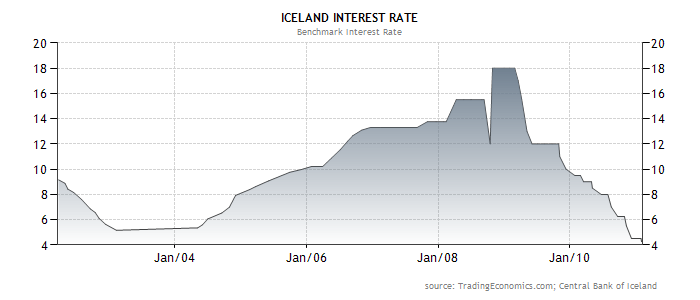
A little more than two years ago, the Icelandic Kronur was one of the hottest currencies in the world. Thanks to a benchmark interest rate of 18%, the Kronur had particular appeal for carry traders, who worried not about the inherent risks of such a strategy. Shortly thereafter, the Kronur (as well as Iceland’s economy and banking sector) came crashing down, and many traders were wiped out. Now that a couple of years have passed, it’s probably worth reflecting on this turn of events.


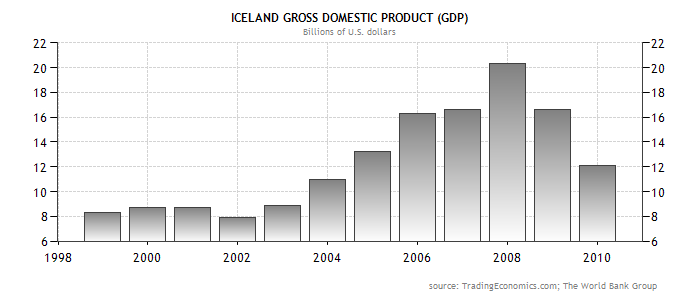
At its peak, nominal GDP was a relatively modest $20 Billion, sandwiched between Nepal and Turkmenistan in the global GDP rankings. Its population is only 300,000, its current account has been mired in persistent deficit, and its Central Bank boasts a mere $8 Billion in foreign exchange reserves. That being the case, why did investors flock to Iceland and not Turkmenistan?
The short answer to that question is interest rates. As I said, Iceland’s benchmark interest rate exceeded 18% at its peak. There are plenty of countries that offered similarly high interest rates, but Iceland was somehow perceived as being more stable. While it didn’t join the European Union until last year, Iceland has always benefited from its association with Europe in general, and Scandinavia in particular. Thanks to per capita GDP of $38,000 per person, its reputation as a stable, advanced economy was not unwarranted.
On the other hand, Iceland has always struggled with high inflation, which means its interest rates were never very high in real terms. In addition, the deregulation of its financial sector opened the door for its banks to take huge risks with deposits. Basically, depositors – many from outside the country – parked their savings in Icelandic banks, which turned around and invested the money in high-yield / high-risk ventures. When the credit crisis struck, its banks were quickly wiped out, and the government chose not to follow in the footsteps of other governments and bail them out.

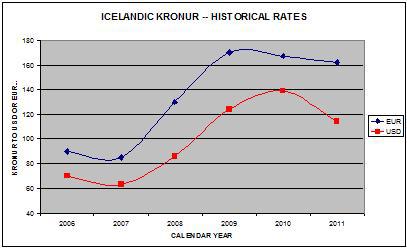
Moreover, it doesn’t look like Iceland will regain its luster any time soon. Its economy has shrunk by 40% over the last two years, and one prominent economist has estimated that it will take 7-10 years for it to fully recover. Unemployment and inflation remain high even though interest rates have been cut to 4.25% – a record low. The Kronur has lost 50% of its value against the Dollar and the Euro, the stock market has been decimated, and the recent decision to not remunerate Dutch and British insurance companies that lost money in Iceland’s crash will only serve to further spook foreign investors. In short, while the Kronur will probably recover some of its value over the next few years (aided by the possibility of joining the Euro), it probably won’t find itself on the radar screens of carry traders anytime soon.
In hindsight, Iceland’s economy was an accident waiting to happen, and the global financial crisis only magnified the problem. With Iceland – as well as a dozen other currencies and securities – investors believed they had found the proverbial free lunch. After all, where else could you earn an 18% by putting money in a savings account? Never mind that inflation was just as high; with the Kronur rising, carry traders felt assured that they would make a tidy profit on any funds deposited in Iceland.
The collapse of the Kronur, however, has shown us that the carry trade is anything but risk-free. In fact, 18% is more than what lenders to Greece and Ireland can expect to earn, which means that it is ultimately a very risky investment. In this case, the 18% that was being paid to depositors were generated by making very risky investments. As the negotiations with the insurance companies have revealed, depositors had nothing protecting them from bank failure, which is ultimately what happened.
Now that the carry trade is making a comeback, it’s probably a good time to take a step back and re-assess the risks of such a strategy. Even if Iceland proves to be an extreme case – since most countries won’t let their banks fail – traders must still acknowledge the possibility of massive currency depreciation. In other words, even if the deposits themselves are guaranteed, there is an ever-present risk that converting that deposit back into one’s home currency will result in losses. That’s especially true for a currency that is as illiquid as the Kronur (so illiquid that it took me a while to even find a reliable quote!), and is susceptible to liquidity crunches and short squeezes.
When you enter into a carry trade, understand that a spike in volatility could wipe out all of your profits in one session. The only way to minimize your risk is to hedge your exposure.
1:34 PM | 0 comments | Read More

Icelandic Kronur: Lessons from a Failed Carry Trade

A little more than two years ago, the Icelandic Kronur was one of the hottest currencies in the world. Thanks to a benchmark interest rate of 18%, the Kronur had particular appeal for carry traders, who worried not about the inherent risks of such a strategy. Shortly thereafter, the Kronur (as well as Iceland’s economy and banking sector) came crashing down, and many traders were wiped out. Now that a couple of years have passed, it’s probably worth reflecting on this turn of events.


At its peak, nominal GDP was a relatively modest $20 Billion, sandwiched between Nepal and Turkmenistan in the global GDP rankings. Its population is only 300,000, its current account has been mired in persistent deficit, and its Central Bank boasts a mere $8 Billion in foreign exchange reserves. That being the case, why did investors flock to Iceland and not Turkmenistan?
The short answer to that question is interest rates. As I said, Iceland’s benchmark interest rate exceeded 18% at its peak. There are plenty of countries that offered similarly high interest rates, but Iceland was somehow perceived as being more stable. While it didn’t join the European Union until last year, Iceland has always benefited from its association with Europe in general, and Scandinavia in particular. Thanks to per capita GDP of $38,000 per person, its reputation as a stable, advanced economy was not unwarranted.
On the other hand, Iceland has always struggled with high inflation, which means its interest rates were never very high in real terms. In addition, the deregulation of its financial sector opened the door for its banks to take huge risks with deposits. Basically, depositors – many from outside the country – parked their savings in Icelandic banks, which turned around and invested the money in high-yield / high-risk ventures. When the credit crisis struck, its banks were quickly wiped out, and the government chose not to follow in the footsteps of other governments and bail them out.

Moreover, it doesn’t look like Iceland will regain its luster any time soon. Its economy has shrunk by 40% over the last two years, and one prominent economist has estimated that it will take 7-10 years for it to fully recover. Unemployment and inflation remain high even though interest rates have been cut to 4.25% – a record low. The Kronur has lost 50% of its value against the Dollar and the Euro, the stock market has been decimated, and the recent decision to not remunerate Dutch and British insurance companies that lost money in Iceland’s crash will only serve to further spook foreign investors. In short, while the Kronur will probably recover some of its value over the next few years (aided by the possibility of joining the Euro), it probably won’t find itself on the radar screens of carry traders anytime soon.
In hindsight, Iceland’s economy was an accident waiting to happen, and the global financial crisis only magnified the problem. With Iceland – as well as a dozen other currencies and securities – investors believed they had found the proverbial free lunch. After all, where else could you earn an 18% by putting money in a savings account? Never mind that inflation was just as high; with the Kronur rising, carry traders felt assured that they would make a tidy profit on any funds deposited in Iceland.
The collapse of the Kronur, however, has shown us that the carry trade is anything but risk-free. In fact, 18% is more than what lenders to Greece and Ireland can expect to earn, which means that it is ultimately a very risky investment. In this case, the 18% that was being paid to depositors were generated by making very risky investments. As the negotiations with the insurance companies have revealed, depositors had nothing protecting them from bank failure, which is ultimately what happened.
Now that the carry trade is making a comeback, it’s probably a good time to take a step back and re-assess the risks of such a strategy. Even if Iceland proves to be an extreme case – since most countries won’t let their banks fail – traders must still acknowledge the possibility of massive currency depreciation. In other words, even if the deposits themselves are guaranteed, there is an ever-present risk that converting that deposit back into one’s home currency will result in losses. That’s especially true for a currency that is as illiquid as the Kronur (so illiquid that it took me a while to even find a reliable quote!), and is susceptible to liquidity crunches and short squeezes.
When you enter into a carry trade, understand that a spike in volatility could wipe out all of your profits in one session. The only way to minimize your risk is to hedge your exposure.
1:34 PM | 0 comments | Read More

Forex Win to Loss Ratios

It has been observed that majority of the individual traders in the Forex market function with no trading technique; hence over the longer period of time, they incur high losses. A Forex trading system or tactic is gear to present you an upper hand in the Forex market.

Better to Work with a Systematic Approach

A Forex trading system verifies whether you are earning profit or not in a Forex market. If you make your trading in a methodical manner then your win to loss ratios will be better than the other traders or investors.

Good Trading System

An excellent trading system is that which has already been evaluated by the investors; hence it has an upper hand in the market and also deliver reasonable amount of earning on continuous basis. A gainful and money making Forex system may have win to loss ratio (the percentage of trades with winning to the trades with losing) of 80 percent.
On the other hand the profit/loss ratio on the volume of the standard win to the volume of standard loss may be 2-3 to 1. You can promptly discover that the mishmash of win/loss and profit/loss proportions (renowned as profitability ratio) enlightens you that the system is money making or not.

How Profitability of System can be Determined?

If you proliferate, the sum of profitability ratio must be more than one. Till the time you get this figure more than one, the system is gainful. Preferably the bigger figure is better

Forex System with High Win/Loss Ratio

You can work with more personal involvement with the system that exhibit high win/loss ratio. Besides that the big profit loss proportion presents worthwhile outcome of trading activities, even though you are not making ample sum to enhance the market liquidity.
Finally, it is the amalgamation of both the profit/loss and the win/loss proportions that are truly important. You must therefore, make an endeavor to look for the system in which mutually these factors are high.

What is PIP?

What is PIP
PIPs are actually the profits earned in the Forex system which can also be recognized as dollar amounts depending upon a float. The profits that are spoken in terms of pips are conceivably the most frequently utilized indicator to evaluate the accomplishment of a system. The alternating method is to estimate the dollar profits established by a theoretical float.
If you have two systems to evaluate, and both the systems have the identical float, in that case you can compare the win/loss ratio of these systems. It means to calculate the percentage of winner trades in comparison to that of losers.

Risk Multiple Principal

R multiple principal is one of the major information that you have to comprehend on Forex day trading. Here R stands for the Risk. It means the amount of risk you are willing to assume on any of the trade when you go in the market. In this regard, the R compound of a trade is the proportion of profit or loss as against the sum of cash put in a risk to earn revenue or incur loss.
For instance, if you put US$150 amount at risk in your preliminary buying, and you earn US$600. It signifies that you have made four times the sum of cash that you put on risk in this trade. Hence, the R multiple is 4 in this example. This data helps you in calculating the comparative volume of your profits to your losses.

People who liked this Post also read

  • Low Budget Forex Trading Guide
    The principle of low minimum investment has made Forex trading market very popular worldwide. People with small investment amount US$50 can also venture into it. Though you can join the Forex trading business with tight budget, but there are certain limit...
  • Forex Scalping Methods Explained
    Forex scalping method is one of the most popular methods used in Forex trading. In the Forex scalping method of trading is for relatively short period of time. The investors also take profit after a little move in the markets. The scalpers are also the ma...
  • Foreign Exchange Spreads
    Spread is an important but complicated parameter in forex trading industry that determines your ability to generate real profits. It is very important to understand forex spreads before working in in this industry....
  • What a Beginner Should Do In Forex Trading?
    Forex market is a highly volatile market that is complicated for beginner forex traders. Beginners can attain stable success in this field by working with useful strategies and skills. They have to be consistent and work hard to achieve firm position in f...
  • What Are the Best Times to Trade the US Dollar?
    The US is the world's second biggest forex trading center. The best time to trade the USD is when the US session is in progress. You have to take care of certain things while trading in the US session whether you are working on long or short term basis....
1:33 PM | 0 comments | Read More

Forex Win to Loss Ratios

It has been observed that majority of the individual traders in the Forex market function with no trading technique; hence over the longer period of time, they incur high losses. A Forex trading system or tactic is gear to present you an upper hand in the Forex market.

Better to Work with a Systematic Approach

A Forex trading system verifies whether you are earning profit or not in a Forex market. If you make your trading in a methodical manner then your win to loss ratios will be better than the other traders or investors.

Good Trading System

An excellent trading system is that which has already been evaluated by the investors; hence it has an upper hand in the market and also deliver reasonable amount of earning on continuous basis. A gainful and money making Forex system may have win to loss ratio (the percentage of trades with winning to the trades with losing) of 80 percent.
On the other hand the profit/loss ratio on the volume of the standard win to the volume of standard loss may be 2-3 to 1. You can promptly discover that the mishmash of win/loss and profit/loss proportions (renowned as profitability ratio) enlightens you that the system is money making or not.

How Profitability of System can be Determined?

If you proliferate, the sum of profitability ratio must be more than one. Till the time you get this figure more than one, the system is gainful. Preferably the bigger figure is better

Forex System with High Win/Loss Ratio

You can work with more personal involvement with the system that exhibit high win/loss ratio. Besides that the big profit loss proportion presents worthwhile outcome of trading activities, even though you are not making ample sum to enhance the market liquidity.
Finally, it is the amalgamation of both the profit/loss and the win/loss proportions that are truly important. You must therefore, make an endeavor to look for the system in which mutually these factors are high.

What is PIP?

What is PIP
PIPs are actually the profits earned in the Forex system which can also be recognized as dollar amounts depending upon a float. The profits that are spoken in terms of pips are conceivably the most frequently utilized indicator to evaluate the accomplishment of a system. The alternating method is to estimate the dollar profits established by a theoretical float.
If you have two systems to evaluate, and both the systems have the identical float, in that case you can compare the win/loss ratio of these systems. It means to calculate the percentage of winner trades in comparison to that of losers.

Risk Multiple Principal

R multiple principal is one of the major information that you have to comprehend on Forex day trading. Here R stands for the Risk. It means the amount of risk you are willing to assume on any of the trade when you go in the market. In this regard, the R compound of a trade is the proportion of profit or loss as against the sum of cash put in a risk to earn revenue or incur loss.
For instance, if you put US$150 amount at risk in your preliminary buying, and you earn US$600. It signifies that you have made four times the sum of cash that you put on risk in this trade. Hence, the R multiple is 4 in this example. This data helps you in calculating the comparative volume of your profits to your losses.

People who liked this Post also read

  • Low Budget Forex Trading Guide
    The principle of low minimum investment has made Forex trading market very popular worldwide. People with small investment amount US$50 can also venture into it. Though you can join the Forex trading business with tight budget, but there are certain limit...
  • Forex Scalping Methods Explained
    Forex scalping method is one of the most popular methods used in Forex trading. In the Forex scalping method of trading is for relatively short period of time. The investors also take profit after a little move in the markets. The scalpers are also the ma...
  • Foreign Exchange Spreads
    Spread is an important but complicated parameter in forex trading industry that determines your ability to generate real profits. It is very important to understand forex spreads before working in in this industry....
  • What a Beginner Should Do In Forex Trading?
    Forex market is a highly volatile market that is complicated for beginner forex traders. Beginners can attain stable success in this field by working with useful strategies and skills. They have to be consistent and work hard to achieve firm position in f...
  • What Are the Best Times to Trade the US Dollar?
    The US is the world's second biggest forex trading center. The best time to trade the USD is when the US session is in progress. You have to take care of certain things while trading in the US session whether you are working on long or short term basis....
1:33 PM | 0 comments | Read More

Forex Markets Focus on Central Banks

Over the last year and increasingly over the last few months, Central Banks around the world have taken center stage in currency markets. First, came the ignition of the currency war and the consequent volley of forex interventions. Then came the prospect of monetary tightening and the unwinding of quantitative easing measures. As if that wasn’t enough to keep them busy, Central Banks have been forced to assume more prominent roles in regulating financial markets and drafting economic policy. With so much to do, perhaps it’s no wonder that Jean-Claude Trichet, head of the ECB, will leave his post at the end of this year!

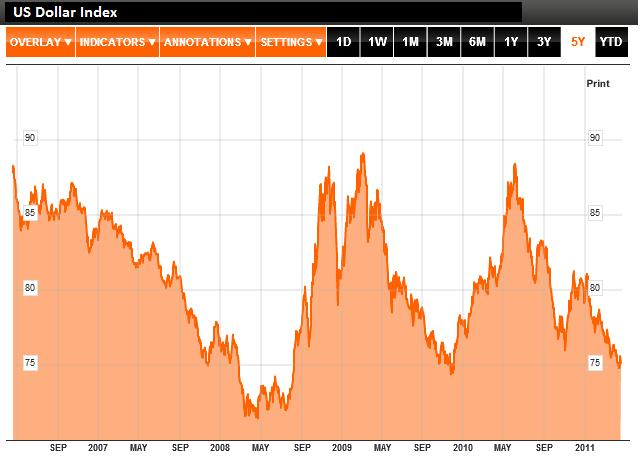
The currency wars may have subsided, but they haven’t ended. On both a paired and trade-weighted basis, the Dollar is declining rapidly. As a result, emerging market Central Banks are still doing everything they can to protect their respective currencies from rapid appreciation. As I’ve written in earlier posts, most Latin American and Asian Central Banks have already announced targeted strategies, and many intervene in forex markets on a daily basis. If the Japanese Yen continues to appreciate, you can bet the Bank of Japan (perhaps aided by the G7) will quickly jump back in.
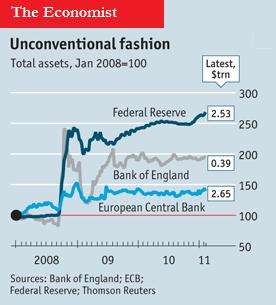
You can expect the currency wars to continue until the quantitative easing programs instituted by the G4 are withdrawn. The Fed’s $600 Billion Treasury bond buying program officially ends in June, at which point its balance sheet will near $3 Trillion. The European Central Bank has injected an equally large hunk of cash into the Eurozone economy. Despite inflation that may soon exceed 5%, the Bank of England voted not to sell its cache of QE assets, while the Bank of Japan is actually ratcheting up its program as a result of the earthquake-induced catastrophe. Whether or not this manifests itself in higher inflation, investors have signaled their distaste by bidding up the price of gold to a new record high.

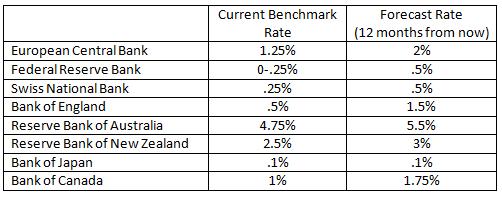
Then there are the prospective rate hikes, cascading across the world. Last week, the European Central Bank became the first in the G4 to hike rates (though market rates have hardly budged). The Reserve Bank of Australia, however, was the first of the majors to hike rates. Since October 2009, it has raised its benchmark by 175 basis points; its 4.75% cash rate is easily the highest in the industrialized world. The Bank of Canada started hiking in June 2010, but has kept its benchmark on hold at 1% since September. The Reserve Bank of New Zealand lowered its benchmark to a record low 2.5% as a result of serious earthquakes and economic weakness.
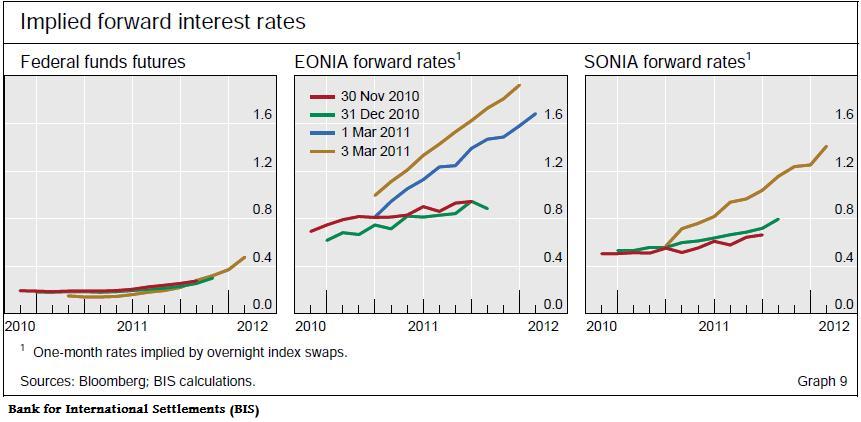
Going forward, expectations are for all Central Banks to continue (or begin) hiking rates at a gradual pace over the next couple years. If forecasts prove to be accurate, the US Federal Funds Rate will stand around .5% at the beginning of 2012, tied with Switzerland, and ahead of only Japan. The UK Rate will stand slightly above 1%, while the Eurozone and Canadian benchmarks will be closer to 2%. The RBA cash rate should exceed 5%. Rates in emerging markets will probably be even higher, as all four BRIC countries (Russia, Brazil, China, India) should be well into the tightening cycles.

On the one hand, there is reason to believe that the pace of rate hikes will be slower than expected. Economic growth remains tepid across the industrialized world, and Central Banks are wary about spooking their economies with premature rate hikes. Besides, Fed watchers may have learned a lesson as a result of a brief bout of over-excitement in 2010 that ultimately led to nothing. The Economist has reported that, “Markets habitually assign too much weight to the hawks, however. The real power at the Fed rests with its leaders…At present they are sanguine about inflation and worried about unemployment, which means a rate rise this year is unlikely.”  Even the ECB disappointed traders by (deliberately) adopting a soft stance in the press release that accompanied its recent rate hike.
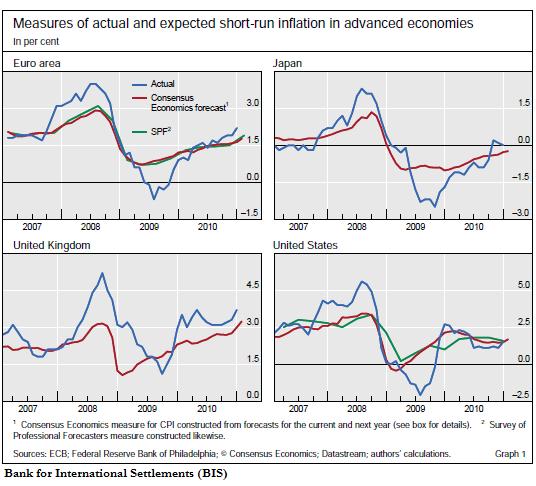
On the other hand, a recent paper published by the Bank for International Settlements (BIS) showed that the markets’ track record of forecasting inflation is weak. As you can see from the chart below, they tend to reflect the general trend in inflation, but underestimate when the direction changes suddenly. (This is perhaps similar to the “fat-tail” problem, whereby extreme aberrations in asset price returns are poorly accounted for in financial models). If you apply this to the current economic environment, it suggests that inflation will probably be much higher-than-expected, and Central Banks will be forced to compensate by hiking rates a faster pace.
Finally, in their newfound roles as economic policymakers, Central Banks are increasingly engaged in macroprudential policy. The Economist reports that, “Central banks and regulators in emerging economies have already imposed a host of measures to cool property prices and capital inflows.” These measures are worth watching because their chief aim is to indirectly reduce inflation. If they are successful, it will limit the need for interest rate hikes and reduce upward pressure on their currencies.
In short, given the enhanced ability of Central Banks to dictate exchange rates, traders with long-term outlooks may need to adjust their strategies accordingly. That means not only knowing who is expected to raise interest rates – as well as when and by how much – but also monitoring the use of their other tools, such as balance sheet expansion, efforts to cool asset price bubbles, and deliberate manipulation of exchange rates.
1:31 PM | 0 comments | Read More

Forex Markets Focus on Central Banks

Over the last year and increasingly over the last few months, Central Banks around the world have taken center stage in currency markets. First, came the ignition of the currency war and the consequent volley of forex interventions. Then came the prospect of monetary tightening and the unwinding of quantitative easing measures. As if that wasn’t enough to keep them busy, Central Banks have been forced to assume more prominent roles in regulating financial markets and drafting economic policy. With so much to do, perhaps it’s no wonder that Jean-Claude Trichet, head of the ECB, will leave his post at the end of this year!

The currency wars may have subsided, but they haven’t ended. On both a paired and trade-weighted basis, the Dollar is declining rapidly. As a result, emerging market Central Banks are still doing everything they can to protect their respective currencies from rapid appreciation. As I’ve written in earlier posts, most Latin American and Asian Central Banks have already announced targeted strategies, and many intervene in forex markets on a daily basis. If the Japanese Yen continues to appreciate, you can bet the Bank of Japan (perhaps aided by the G7) will quickly jump back in.
You can expect the currency wars to continue until the quantitative easing programs instituted by the G4 are withdrawn. The Fed’s $600 Billion Treasury bond buying program officially ends in June, at which point its balance sheet will near $3 Trillion. The European Central Bank has injected an equally large hunk of cash into the Eurozone economy. Despite inflation that may soon exceed 5%, the Bank of England voted not to sell its cache of QE assets, while the Bank of Japan is actually ratcheting up its program as a result of the earthquake-induced catastrophe. Whether or not this manifests itself in higher inflation, investors have signaled their distaste by bidding up the price of gold to a new record high.

Then there are the prospective rate hikes, cascading across the world. Last week, the European Central Bank became the first in the G4 to hike rates (though market rates have hardly budged). The Reserve Bank of Australia, however, was the first of the majors to hike rates. Since October 2009, it has raised its benchmark by 175 basis points; its 4.75% cash rate is easily the highest in the industrialized world. The Bank of Canada started hiking in June 2010, but has kept its benchmark on hold at 1% since September. The Reserve Bank of New Zealand lowered its benchmark to a record low 2.5% as a result of serious earthquakes and economic weakness.
Going forward, expectations are for all Central Banks to continue (or begin) hiking rates at a gradual pace over the next couple years. If forecasts prove to be accurate, the US Federal Funds Rate will stand around .5% at the beginning of 2012, tied with Switzerland, and ahead of only Japan. The UK Rate will stand slightly above 1%, while the Eurozone and Canadian benchmarks will be closer to 2%. The RBA cash rate should exceed 5%. Rates in emerging markets will probably be even higher, as all four BRIC countries (Russia, Brazil, China, India) should be well into the tightening cycles.

On the one hand, there is reason to believe that the pace of rate hikes will be slower than expected. Economic growth remains tepid across the industrialized world, and Central Banks are wary about spooking their economies with premature rate hikes. Besides, Fed watchers may have learned a lesson as a result of a brief bout of over-excitement in 2010 that ultimately led to nothing. The Economist has reported that, “Markets habitually assign too much weight to the hawks, however. The real power at the Fed rests with its leaders…At present they are sanguine about inflation and worried about unemployment, which means a rate rise this year is unlikely.”  Even the ECB disappointed traders by (deliberately) adopting a soft stance in the press release that accompanied its recent rate hike.
On the other hand, a recent paper published by the Bank for International Settlements (BIS) showed that the markets’ track record of forecasting inflation is weak. As you can see from the chart below, they tend to reflect the general trend in inflation, but underestimate when the direction changes suddenly. (This is perhaps similar to the “fat-tail” problem, whereby extreme aberrations in asset price returns are poorly accounted for in financial models). If you apply this to the current economic environment, it suggests that inflation will probably be much higher-than-expected, and Central Banks will be forced to compensate by hiking rates a faster pace.
Finally, in their newfound roles as economic policymakers, Central Banks are increasingly engaged in macroprudential policy. The Economist reports that, “Central banks and regulators in emerging economies have already imposed a host of measures to cool property prices and capital inflows.” These measures are worth watching because their chief aim is to indirectly reduce inflation. If they are successful, it will limit the need for interest rate hikes and reduce upward pressure on their currencies.
In short, given the enhanced ability of Central Banks to dictate exchange rates, traders with long-term outlooks may need to adjust their strategies accordingly. That means not only knowing who is expected to raise interest rates – as well as when and by how much – but also monitoring the use of their other tools, such as balance sheet expansion, efforts to cool asset price bubbles, and deliberate manipulation of exchange rates.
1:31 PM | 0 comments | Read More

Time to Short the Euro

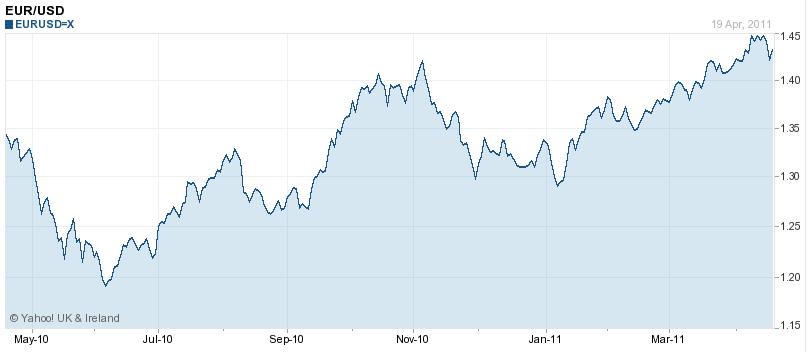
Over the last three months, the Euro has appreciated 10% against the Dollar and by smaller margins against a handful of other currencies. Over the last twelve months, that figure is closer to 20%. That’s in spite of anemic Eurozone GDP growth, serious fiscal issues, the increasing likelihood of one or more sovereign debt defaults, and a current account deficit to boot. In short, I think it might be time to short the Euro.


There’s very little mystery as to why the Euro is appreciating. In two words: interest rates. Last week, the European Central Bank (ECB) became the first G4 Central Bank to hike its benchmark interest rate. Moreover, it’s expected to raise rates by an additional 100 basis points over the next twelve months. Given that the Bank of England, Bank of Japan, and US Federal Reserve Bank have yet to unwind their respective quantitative easing programs, it’s no wonder that futures markets have priced in a healthy interest rate advantage into the Euro well into 2012.

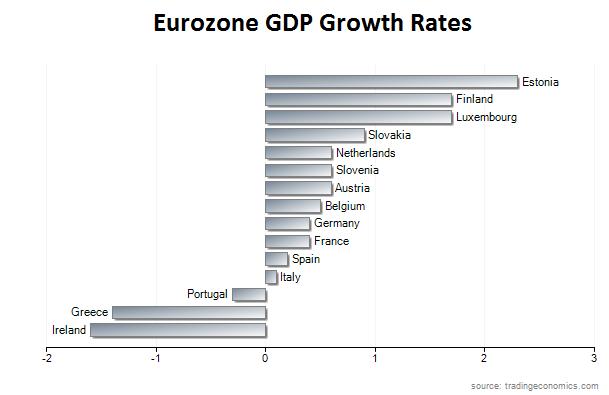
From where I’m sitting, the ECB rate hike was fundamentally illogical, and perhaps even counterproductive. Granted, the ECB was created to ensure price stability, and its mandate is less nuanced than its counterparts, which are charged also with facilitating employment and GDP growth. Even from this perspective, however, it looks like the ECB jumped the gun. Inflation in the EU is a moderate 2.7%, which is among the lowest in the world. Other Central Banks have taken note of rising inflation, but only the ECB feels compelled enough to preemptively address it. In addition, GDP growth is a paltry .3% across the EU, and is in fact negative in Greece, Ireland, and Portugal. As if the rate hike wasn’t bad enough, all three countries must contend with a hike in their already stratospheric borrowing costs, ironically making default more likely. Talk about not seeing the forest for the trees!
If the rumors are true, Portugal will soon become the third country to receive a bailout from the EU. (It should be noted that as recently as November, Portugal insisted that it was just fine and that a bailout wasn’t necessary). Its sovereign credit rating is now three notches above junk status. Today, Greece became the first Eurozone country to be awarded this dubious distinction, and Ireland is now only one downgrade away from suffering the same fate. Of course, Spain insists that it is just fine and denies the possibility of a bailout. At this point, though, does it have any credibility? Based on rising credit default swap rates (which serve as a gauge of the probability of default), I think that investors have become a little more cynical about taking governments at face value.
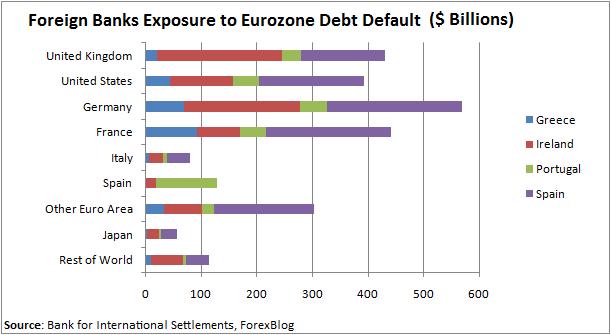
I have discussed the fiscal woes of the Eurozone in previous posts, and don’t want to dwell on them here. For now, I’d only like to add a footnote on the extent to which their problems are intertwined.  Banks in Germany and France (as well as the rest of the EU) have tremendous balance sheet exposure to PIGS’ sovereign debt, which means that any default would multiply across the Eurozone in the form of bank failures. (You can see from the chart below that the exposure of the US is small, relative to GDP).
Some analysts insist that all of this has already been priced into the Euro. Citigroup Said, “The market is treating many of these [sovereign credit rating] downgrades as rearguard actions which are already well discounted.” Personally, I don’t think that forex markets have made a sincere effort to grapple with the possibility of default, which appears increasingly inevitable. In fact, when S&P issued a warning on the US AAA rating, traders responded by handing the Euro its worst intraday decline in 2011.
Any way you cut it, I think the Euro is overvalued. Regardless of what the ECB is doing, market interest rates don’t really confer much benefit to those holding Euros. Even if the rate differential widens to 1-2% over the next year (which is certainly not guaranteed, as Jean-Claude Trichet himself has conceded!) this isn’t really enough to compensate for the possibility of default or other risk event. Regardless of whether you want to be long or short risk, there isn’t much to be gained at the moment from holding the Euro.
1:29 PM | 0 comments | Read More

Time to Short the Euro

Over the last three months, the Euro has appreciated 10% against the Dollar and by smaller margins against a handful of other currencies. Over the last twelve months, that figure is closer to 20%. That’s in spite of anemic Eurozone GDP growth, serious fiscal issues, the increasing likelihood of one or more sovereign debt defaults, and a current account deficit to boot. In short, I think it might be time to short the Euro.


There’s very little mystery as to why the Euro is appreciating. In two words: interest rates. Last week, the European Central Bank (ECB) became the first G4 Central Bank to hike its benchmark interest rate. Moreover, it’s expected to raise rates by an additional 100 basis points over the next twelve months. Given that the Bank of England, Bank of Japan, and US Federal Reserve Bank have yet to unwind their respective quantitative easing programs, it’s no wonder that futures markets have priced in a healthy interest rate advantage into the Euro well into 2012.

From where I’m sitting, the ECB rate hike was fundamentally illogical, and perhaps even counterproductive. Granted, the ECB was created to ensure price stability, and its mandate is less nuanced than its counterparts, which are charged also with facilitating employment and GDP growth. Even from this perspective, however, it looks like the ECB jumped the gun. Inflation in the EU is a moderate 2.7%, which is among the lowest in the world. Other Central Banks have taken note of rising inflation, but only the ECB feels compelled enough to preemptively address it. In addition, GDP growth is a paltry .3% across the EU, and is in fact negative in Greece, Ireland, and Portugal. As if the rate hike wasn’t bad enough, all three countries must contend with a hike in their already stratospheric borrowing costs, ironically making default more likely. Talk about not seeing the forest for the trees!
If the rumors are true, Portugal will soon become the third country to receive a bailout from the EU. (It should be noted that as recently as November, Portugal insisted that it was just fine and that a bailout wasn’t necessary). Its sovereign credit rating is now three notches above junk status. Today, Greece became the first Eurozone country to be awarded this dubious distinction, and Ireland is now only one downgrade away from suffering the same fate. Of course, Spain insists that it is just fine and denies the possibility of a bailout. At this point, though, does it have any credibility? Based on rising credit default swap rates (which serve as a gauge of the probability of default), I think that investors have become a little more cynical about taking governments at face value.
I have discussed the fiscal woes of the Eurozone in previous posts, and don’t want to dwell on them here. For now, I’d only like to add a footnote on the extent to which their problems are intertwined.  Banks in Germany and France (as well as the rest of the EU) have tremendous balance sheet exposure to PIGS’ sovereign debt, which means that any default would multiply across the Eurozone in the form of bank failures. (You can see from the chart below that the exposure of the US is small, relative to GDP).
Some analysts insist that all of this has already been priced into the Euro. Citigroup Said, “The market is treating many of these [sovereign credit rating] downgrades as rearguard actions which are already well discounted.” Personally, I don’t think that forex markets have made a sincere effort to grapple with the possibility of default, which appears increasingly inevitable. In fact, when S&P issued a warning on the US AAA rating, traders responded by handing the Euro its worst intraday decline in 2011.
Any way you cut it, I think the Euro is overvalued. Regardless of what the ECB is doing, market interest rates don’t really confer much benefit to those holding Euros. Even if the rate differential widens to 1-2% over the next year (which is certainly not guaranteed, as Jean-Claude Trichet himself has conceded!) this isn’t really enough to compensate for the possibility of default or other risk event. Regardless of whether you want to be long or short risk, there isn’t much to be gained at the moment from holding the Euro.
1:29 PM | 0 comments | Read More